SAVE 15% OFF ON YOUR FIRST ORDER - USE CODE PERFORM15 AT CHECKOUT

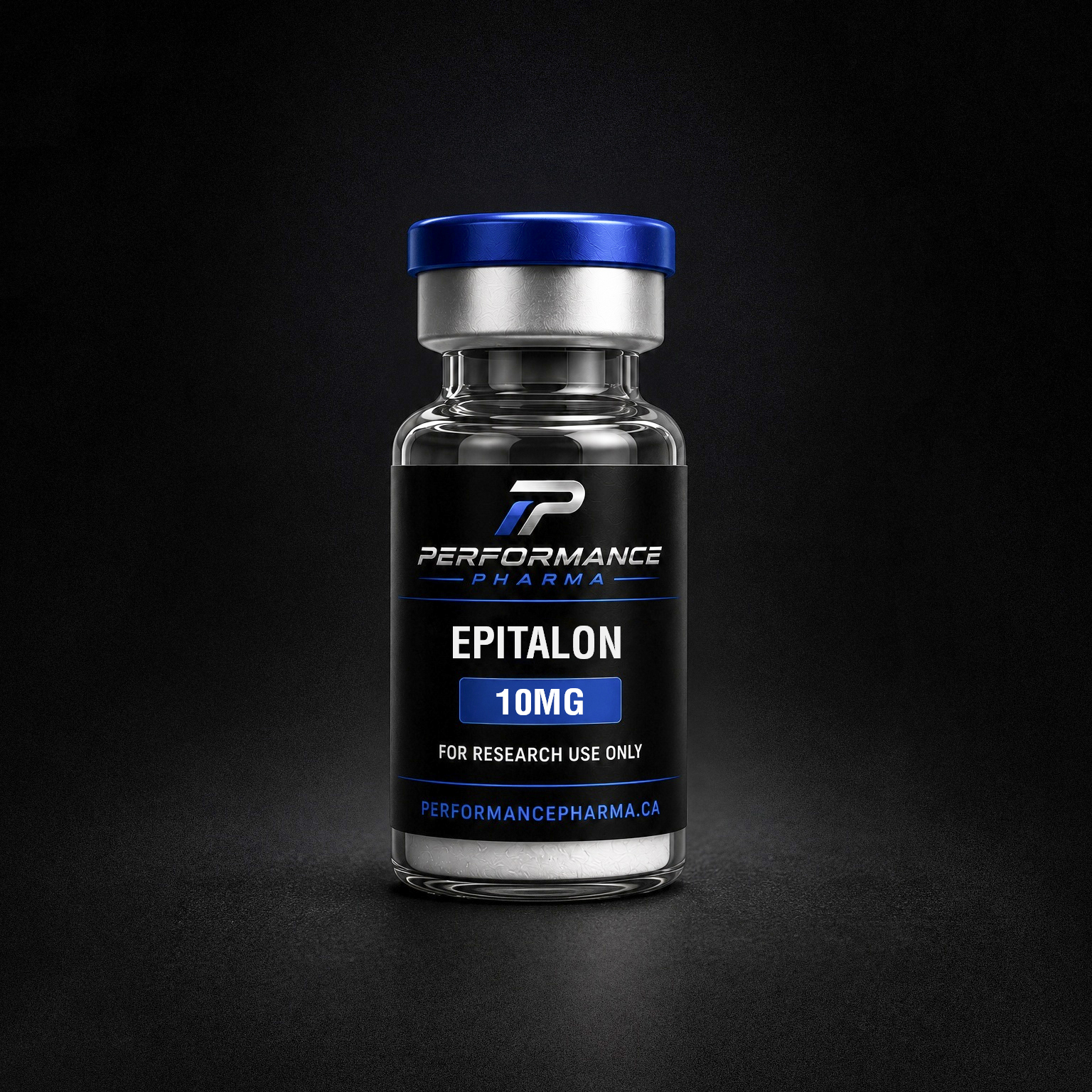


Epitalon – Research Peptide
$45.00
Epitalon is a synthetic tetrapeptide developed from epithalamic peptide research. It has attracted attention for studies involving cellular aging, telomere biology, and longevity-related mechanisms.
Description
Epitalon (also known as Epithalon or Ala-Glu-Asp-Gly) is a synthetic tetrapeptide originally developed as an analog of the naturally occurring peptide complex epithalamin, which is isolated from the pineal gland. Since its development, Epitalon has become an important investigational compound in research focused on aging biology, telomere regulation, cellular senescence, circadian physiology, and oxidative stress.
Interest in Epitalon stems from experimental evidence suggesting it may influence cellular longevity pathways, particularly those involving telomerase activity and telomere maintenance. These observations have positioned the peptide as a valuable research tool for investigating mechanisms underlying healthy aging and age-related cellular decline.
Although Epitalon has been evaluated in laboratory studies, animal models, and several human investigations, many proposed biological effects require further validation through large, well-controlled clinical studies.
Research Overview
Aging is characterized by progressive changes in cellular function, including genomic instability, oxidative stress, mitochondrial dysfunction, and shortening of telomeres—the protective DNA-protein structures located at the ends of chromosomes.
Telomere shortening occurs naturally during repeated cellular division and has been associated with cellular senescence in numerous experimental models. Because telomerase is capable of maintaining telomere length in specific cell types, researchers have investigated whether modulation of this enzyme may influence cellular aging processes.
Epitalon was developed as a synthetic peptide to study these mechanisms. In addition to telomere biology, research has explored its influence on pineal gland physiology, antioxidant defense systems, circadian regulation, and genomic stability.
Mechanism of Action
The complete mechanism of action of Epitalon has not been fully established. Current evidence suggests it influences multiple cellular pathways associated with aging biology.
Telomerase Regulation
One of the defining areas of Epitalon research is its potential influence on telomerase, the enzyme responsible for maintaining telomere length.
Experimental investigations suggest Epitalon may:
- Increase telomerase activity in certain cell types
- Support telomere maintenance
- Delay cellular senescence in laboratory models
- Influence replicative cellular lifespan
Researchers continue to investigate the significance of these findings across different tissues.
Oxidative Stress
Reactive oxygen species contribute to cumulative cellular damage over time.
Experimental studies suggest Epitalon may support endogenous antioxidant defense systems by influencing oxidative stress pathways and reducing markers of cellular damage in laboratory models.
Circadian Biology
Because Epitalon originated from research involving the pineal gland, investigators have examined its relationship with circadian regulation and melatonin physiology.
Current evidence suggests the peptide may influence neuroendocrine pathways involved in maintaining normal biological rhythms.
Cellular Homeostasis
Laboratory investigations indicate Epitalon may affect gene expression related to DNA repair, apoptosis, and cellular adaptation.
These mechanisms remain active areas of aging and molecular biology research.
Current Scientific Research
Epitalon has been investigated primarily in laboratory studies and animal models, with several clinical investigations exploring age-related physiological changes.
Aging Research
Much of the published literature focuses on:
- Cellular senescence
- Telomere biology
- Healthy aging
- Oxidative stress
- Longevity pathways
These studies continue to provide insight into mechanisms of biological aging.
Telomere Biology
Researchers have examined whether modulation of telomerase activity influences genomic stability and cellular lifespan.
Although encouraging findings have been reported in experimental models, additional independent clinical research is required to confirm these observations in humans.
Neuroendocrine Research
Experimental investigations continue to explore the relationship between Epitalon, pineal gland function, melatonin secretion, and circadian rhythm regulation.
These studies aim to better understand the role of neuroendocrine signaling in healthy aging.
Molecular Gerontology
Modern research has expanded to include the peptide’s effects on gene expression, oxidative damage, mitochondrial health, and other hallmarks of aging.
These investigations continue to shape understanding of the molecular mechanisms underlying age-related cellular decline.
Potential Research Applications
Current scientific literature is investigating Epitalon in relation to:
- Telomere biology
- Telomerase regulation
- Cellular senescence
- Healthy aging
- Oxidative stress
- Circadian physiology
- Pineal gland biology
- Molecular gerontology
- Genomic stability
These represent active areas of scientific investigation and should not be interpreted as established therapeutic indications.
Product Snapshot
Research Category: Longevity and Cellular Aging Research Peptide
Alternative Names: Epithalon, Ala-Glu-Asp-Gly
Primary Biological Areas of Investigation:
- Telomerase activity
- Telomere maintenance
- Cellular senescence
- Circadian regulation
- Oxidative stress
Research Administration Route: Experimental laboratory use
Development Status: Extensive preclinical research with limited human clinical investigation
Evidence Strength: ★★★☆☆
Strong mechanistic and laboratory evidence with promising translational findings. Larger, independent human clinical studies remain necessary.
Key Scientific References
Khavinson V, Anisimov VN, et al. Peptide Regulation of Gene Expression and Protein Synthesis in Aging. Bulletin of Experimental Biology and Medicine.
A foundational publication describing the development of Epitalon and its proposed influence on gene regulation, aging biology, and cellular homeostasis.
Khavinson V, Linkova N, et al. Epitalon Activates Telomerase and Promotes Telomere Elongation in Human Somatic Cells. Bulletin of Experimental Biology and Medicine.
A landmark experimental study reporting increased telomerase activity and telomere maintenance following Epitalon exposure in cultured human cells.
Blackburn EH. Telomeres and Telomerase: The Means to the End. Nature Reviews Molecular Cell Biology.
An authoritative review explaining the biology of telomeres and telomerase, providing essential context for understanding ongoing Epitalon research.
López-Otín C, Blasco MA, Partridge L, Serrano M, Kroemer G. The Hallmarks of Aging. Cell.
A highly influential review outlining the fundamental mechanisms of biological aging, including telomere attrition, genomic instability, and mitochondrial dysfunction—key pathways investigated in Epitalon research.
PubMed – Epitalon Research
A continually updated collection of peer-reviewed publications examining Epitalon across telomere biology, cellular senescence, oxidative stress, circadian physiology, and molecular gerontology.
Research Use Statement
For Research Use Only.
Epitalon supplied by Performance Pharma is intended exclusively for laboratory and scientific research conducted by qualified professionals. This product is not approved for human or veterinary use and is not intended to diagnose, treat, cure, or prevent any disease. It should be handled, stored, and used in accordance with applicable laws, regulations, and accepted laboratory research practices.
Additional information
| Size | 10MG |
|---|
Reviews (0)
Shipping and Delivery


Related products


NAD+ – Research Peptide
Price range: $50.00 through $80.00
Sold out
Select options
This product has multiple variants. The options may be chosen on the product page
Reviews
There are no reviews yet.