SAVE 15% OFF ON YOUR FIRST ORDER - USE CODE PERFORM15 AT CHECKOUT

Sold out
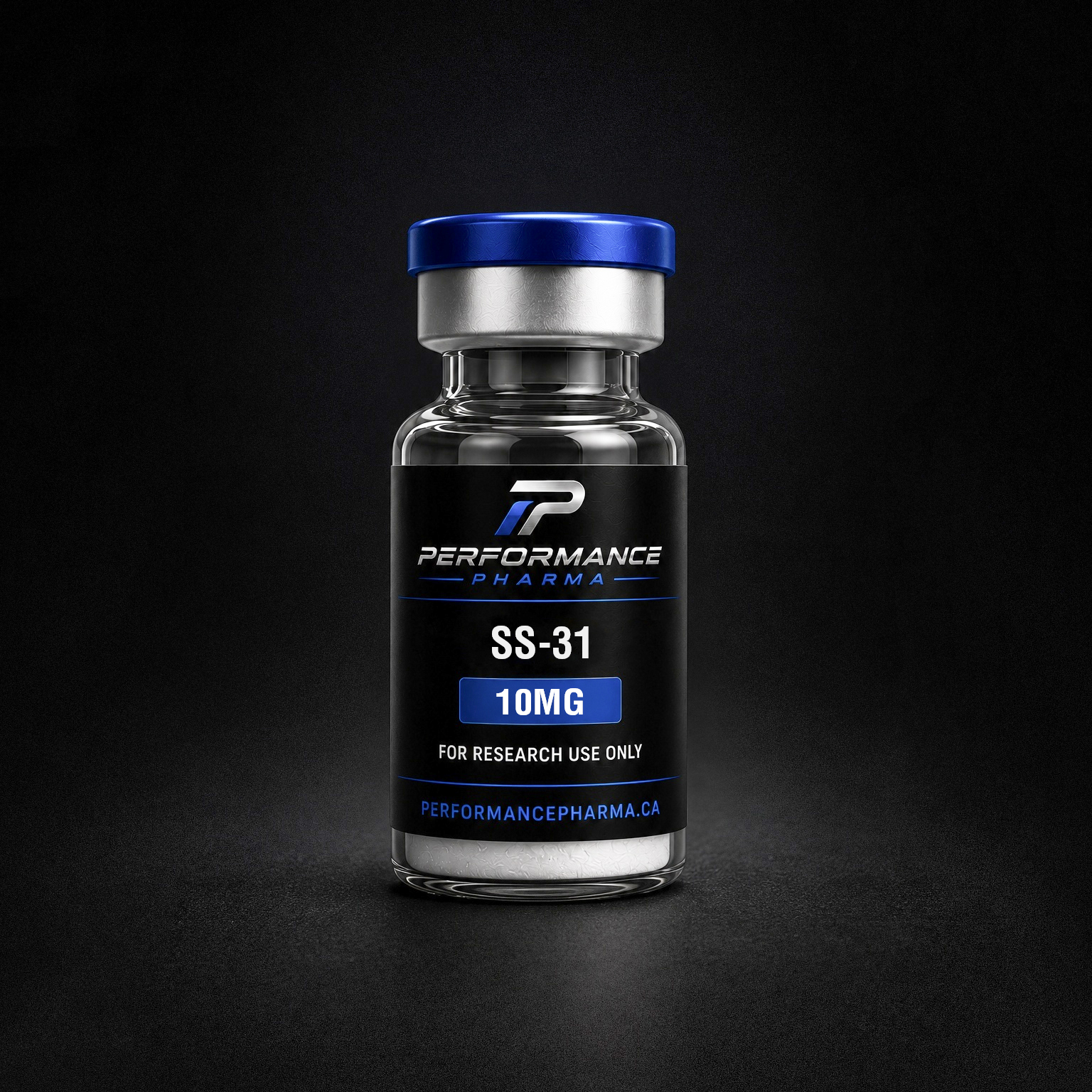


SS-31 – Research Peptide
$75.00
SS-31 (Elamipretide) is a mitochondria-targeting peptide designed to interact with mitochondrial membranes. Research focuses on cellular energy production, oxidative stress management, and mitochondrial health.
Description
SS-31 (also known as Elamipretide or MTP-131) is a synthetic mitochondria-targeting tetrapeptide developed to selectively localize within the inner mitochondrial membrane. Unlike many investigational peptides that act through cell surface receptors, SS-31 is designed to interact directly with mitochondrial phospholipids—particularly cardiolipin—to study mitochondrial structure, bioenergetics, and cellular resilience under conditions of metabolic stress.
Mitochondria are responsible for the majority of cellular ATP production and play central roles in oxidative metabolism, reactive oxygen species (ROS) regulation, calcium homeostasis, and apoptosis. Because mitochondrial dysfunction has been implicated in numerous age-related and metabolic disorders, SS-31 has become an important research tool for investigating mitochondrial physiology across a wide range of experimental models.
Over the past two decades, SS-31 has progressed from laboratory studies into multiple human clinical trials, making it one of the most extensively investigated mitochondria-targeting peptides currently available for scientific research.
Research Overview
Mitochondrial dysfunction contributes to impaired cellular energy production, increased oxidative stress, and reduced tissue resilience. These processes are increasingly recognized as common features of aging and numerous chronic disease models.
SS-31 was developed to selectively accumulate within mitochondria by binding cardiolipin, a phospholipid unique to the inner mitochondrial membrane. Cardiolipin is essential for maintaining mitochondrial membrane architecture and supporting the function of the electron transport chain.
Rather than stimulating a specific hormone or receptor, SS-31 is primarily investigated for its ability to preserve mitochondrial structure and improve bioenergetic efficiency during cellular stress.
Its broad applicability has led to investigations in cardiovascular physiology, skeletal muscle biology, renal function, ophthalmology, and neurodegenerative research.
Mechanism of Action
SS-31 exerts its biological activity through direct interactions with mitochondrial membranes rather than traditional receptor-mediated signaling.
Cardiolipin Binding
The defining characteristic of SS-31 is its selective affinity for cardiolipin, an essential phospholipid located within the inner mitochondrial membrane.
Experimental studies suggest this interaction may help:
- Stabilize mitochondrial membrane architecture
- Preserve cristae structure
- Support electron transport chain organization
- Improve mitochondrial efficiency
Bioenergetics
By supporting mitochondrial integrity, SS-31 has been investigated for its influence on cellular ATP production.
Researchers continue to study its effects on:
- Oxidative phosphorylation
- Electron transport efficiency
- Cellular energy metabolism
- Metabolic resilience
Oxidative Stress
Reactive oxygen species are natural byproducts of mitochondrial respiration but may accumulate during mitochondrial dysfunction.
Experimental investigations suggest SS-31 may reduce excessive mitochondrial oxidative stress by improving electron transport efficiency rather than functioning as a conventional antioxidant.
Cellular Survival
Laboratory studies indicate that preservation of mitochondrial function may influence signaling pathways involved in apoptosis, inflammation, and tissue recovery following experimental injury.
These mechanisms remain active areas of investigation.
Current Scientific Research
SS-31 has been evaluated in laboratory studies, animal models, and numerous Phase I–III clinical investigations across several research fields.
Mitochondrial Biology
One of the primary applications of SS-31 has been the investigation of mitochondrial function under physiological and pathological conditions.
Researchers continue to study:
- Mitochondrial membrane integrity
- ATP production
- Oxidative phosphorylation
- Cellular bioenergetics
- Reactive oxygen species regulation
Cardiovascular Research
Experimental and clinical studies have explored SS-31 in relation to cardiac mitochondrial function, myocardial energetics, ischemia-reperfusion injury, and heart failure models.
These investigations have provided valuable insight into the relationship between mitochondrial health and cardiovascular physiology.
Skeletal Muscle Research
Because skeletal muscle has high energy demands, SS-31 has become an important tool for studying muscle energetics, mitochondrial adaptation, and age-related declines in physical function.
Ophthalmology and Renal Research
Clinical investigations have also evaluated SS-31 in models involving mitochondrial dysfunction affecting ocular and renal tissues, expanding its relevance across multiple medical disciplines.
Potential Research Applications
Current scientific literature is investigating SS-31 in relation to:
- Mitochondrial biology
- Cellular bioenergetics
- Oxidative stress
- Skeletal muscle physiology
- Cardiovascular research
- Neurodegenerative disease models
- Kidney physiology
- Ocular disease models
- Healthy aging
These represent active areas of scientific investigation and should not be interpreted as established therapeutic indications.
Product Snapshot
Research Category: Mitochondria-Targeting Research Peptide
Alternative Names: Elamipretide, MTP-131, Bendavia
Primary Molecular Target:
- Cardiolipin within the inner mitochondrial membrane
Research Administration Route: Experimental laboratory use
Development Status: Extensive preclinical research with multiple Phase I–III clinical investigations
Evidence Strength: ★★★★★
Extensive mechanistic, translational, and clinical evidence supports SS-31 as one of the most thoroughly studied mitochondrial-targeting peptides currently under investigation.
Key Scientific References
Szeto HH, Schiller PW. Novel Therapies Targeting Inner Mitochondrial Membrane—From Discovery to Clinical Development. Pharmacological Reviews.
A landmark review describing the discovery of the Szeto–Schiller peptide family, their affinity for cardiolipin, and the scientific rationale behind mitochondrial-targeted peptide therapy.
Zhao K, Luo G, Giannelli S, Szeto HH. Mitochondria-Targeted Peptide Prevents Mitochondrial Dysfunction and Oxidative Damage. Journal of Biological Chemistry.
A foundational experimental study demonstrating how SS-31 preserves mitochondrial function, improves ATP production, and reduces oxidative stress in cellular models.
Daubert MA, Yow E, Dunn G, et al. Novel Mitochondria-Targeting Peptide in Heart Failure: A Randomized Clinical Trial. Circulation: Heart Failure.
An important clinical investigation evaluating the effects of Elamipretide on cardiac structure, mitochondrial function, and heart failure physiology.
Szeto HH. First-in-Class Cardiolipin-Protective Compound for Mitochondrial Dysfunction. Journal of Internal Medicine.
A comprehensive review summarizing the molecular mechanisms, translational research, and clinical development of SS-31 across multiple disease models.
PubMed – SS-31 (Elamipretide) Research
A continually updated collection of peer-reviewed publications examining SS-31 across mitochondrial biology, cardiovascular physiology, skeletal muscle research, ophthalmology, nephrology, and healthy aging.
Research Use Statement
For Research Use Only.
SS-31 supplied by Performance Pharma is intended exclusively for laboratory and scientific research conducted by qualified professionals. This product is not approved for human or veterinary use and is not intended to diagnose, treat, cure, or prevent any disease. It should be handled, stored, and used in accordance with applicable laws, regulations, and accepted laboratory research practices.
Additional information
| Size | 10MG |
|---|
Reviews (0)
Shipping and Delivery


Related products
Select options
This product has multiple variants. The options may be chosen on the product page
Reviews
There are no reviews yet.