SAVE 15% OFF ON YOUR FIRST ORDER - USE CODE PERFORM15 AT CHECKOUT

Sold out
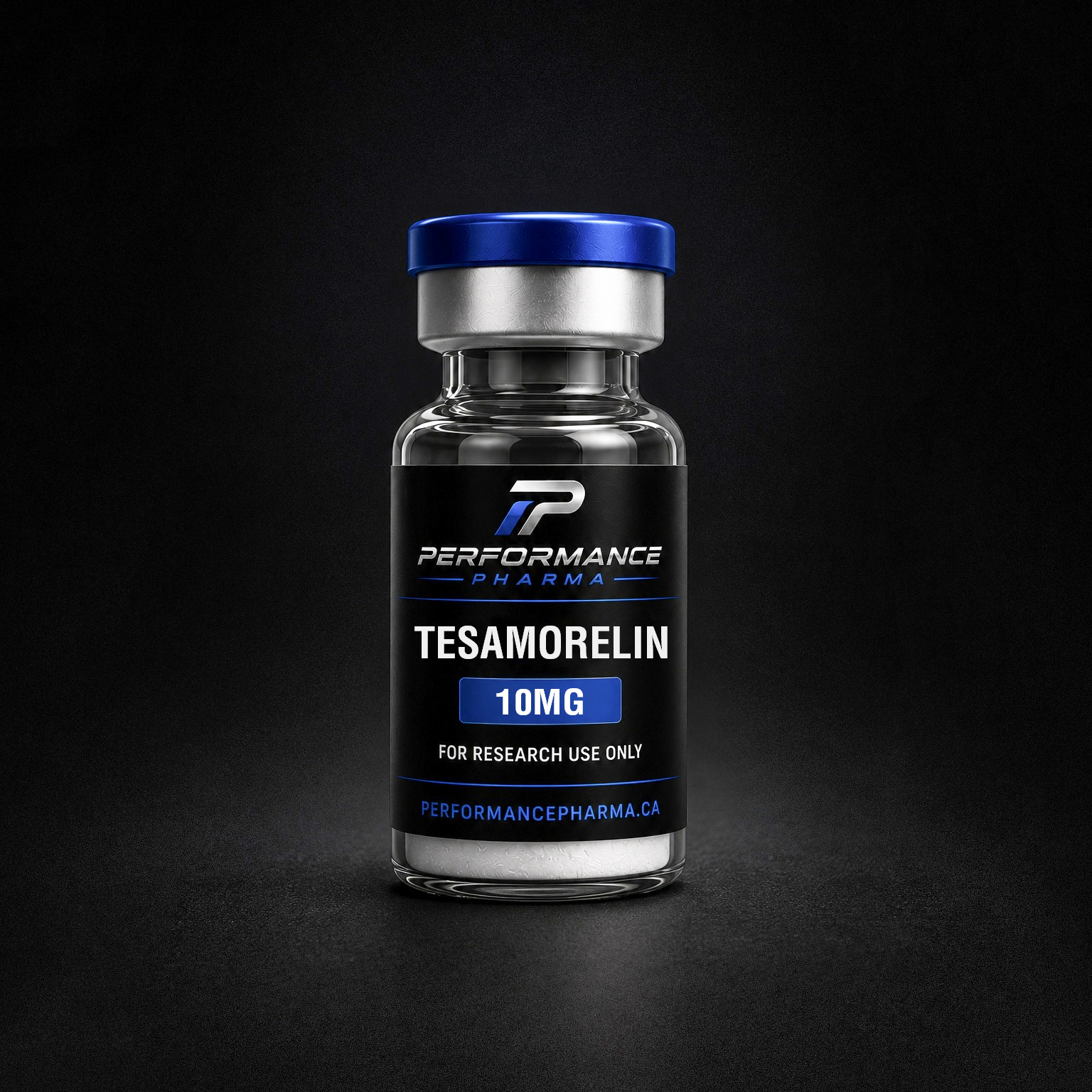
Tesamorelin – Research Peptide
$120.00
Tesamorelin is a synthetic growth hormone releasing hormone (GHRH) analog. It is commonly researched for its effects on growth hormone secretion, metabolic regulation, and body composition.
Description
Tesamorelin is a synthetic analog of growth hormone-releasing hormone (GHRH) developed to selectively stimulate the physiological release of endogenous growth hormone (GH). Structurally modified to improve stability and biological activity compared with native GHRH, Tesamorelin has become an important investigational peptide in endocrinology, metabolism, body composition, and healthy aging research.
Unlike exogenous growth hormone administration, Tesamorelin acts upstream within the hypothalamic-pituitary axis by activating GHRH receptors on pituitary somatotroph cells. This promotes pulsatile GH secretion while preserving the body’s natural endocrine feedback mechanisms. The resulting increase in growth hormone stimulates production of insulin-like growth factor-1 (IGF-1), making Tesamorelin a valuable research tool for investigating the GH/IGF-1 axis.
Tesamorelin has been evaluated extensively in both preclinical and human clinical research, contributing significantly to the scientific understanding of growth hormone physiology and metabolic regulation.
Research Overview
Growth hormone plays an essential role throughout life, influencing protein metabolism, body composition, skeletal integrity, and tissue maintenance. Its secretion is tightly regulated by growth hormone-releasing hormone (GHRH), somatostatin, and ghrelin.
Tesamorelin was designed to mimic the activity of endogenous GHRH while exhibiting greater resistance to enzymatic degradation. By selectively activating pituitary GHRH receptors, it increases endogenous GH secretion in a physiological, pulsatile manner rather than replacing GH directly.
Because this mechanism preserves normal endocrine regulation, Tesamorelin has become widely studied as a model for understanding growth hormone biology, visceral adipose tissue metabolism, and age-related endocrine changes.
Mechanism of Action
Tesamorelin exerts its biological effects through selective activation of the growth hormone-releasing hormone receptor (GHRH-R).
Growth Hormone-Releasing Hormone Receptor Activation
Following receptor binding, Tesamorelin stimulates somatotroph cells within the anterior pituitary gland to synthesize and release endogenous growth hormone.
Unlike recombinant GH administration, endogenous secretion remains regulated by normal hypothalamic feedback mechanisms.
Growth Hormone–IGF-1 Axis
Increased GH secretion stimulates hepatic and peripheral production of insulin-like growth factor-1 (IGF-1).
The GH/IGF-1 axis contributes to numerous physiological processes, including:
- Protein synthesis
- Skeletal muscle maintenance
- Bone remodeling
- Connective tissue biology
- Lipid metabolism
- Cellular growth and repair
These pathways continue to be investigated across multiple research disciplines.
Adipose Tissue Metabolism
One of the distinguishing features of Tesamorelin research is its investigation in visceral adipose tissue biology.
Experimental and clinical studies have explored how increased endogenous GH influences:
- Lipid mobilization
- Fat distribution
- Hepatic lipid metabolism
- Energy homeostasis
Researchers continue to investigate the molecular mechanisms responsible for these observations.
Endocrine Regulation
Tesamorelin serves as a valuable experimental model for studying hypothalamic-pituitary regulation, endocrine feedback loops, and physiological growth hormone pulsatility.
Current Scientific Research
Tesamorelin has been evaluated through extensive laboratory investigations and multiple human clinical studies.
Endocrinology Research
Much of the published literature has focused on:
- Growth hormone physiology
- IGF-1 regulation
- Pituitary function
- GHRH receptor pharmacology
- Endocrine feedback mechanisms
These studies have substantially advanced understanding of physiological GH regulation.
Metabolic Research
Researchers continue to investigate Tesamorelin in relation to:
- Visceral adipose tissue
- Lipid metabolism
- Body composition
- Hepatic fat accumulation
- Insulin sensitivity
These remain active areas of metabolic research.
Healthy Aging Research
Because endogenous GH secretion declines progressively with age, Tesamorelin has become an important investigational tool for studying age-related endocrine physiology and its effects on tissue maintenance and metabolic health.
Combination Research
Tesamorelin is also investigated alongside other endocrine research peptides to better understand interactions within the GH/IGF-1 axis and broader metabolic regulation.
Potential Research Applications
Current scientific literature is investigating Tesamorelin in relation to:
- Growth hormone physiology
- IGF-1 regulation
- Endocrine signaling
- Body composition
- Visceral adipose tissue biology
- Lipid metabolism
- Healthy aging
- Skeletal muscle physiology
- Regenerative biology
These represent active areas of scientific investigation and should not be interpreted as established therapeutic indications.
Product Snapshot
Research Category: Growth Hormone-Releasing Hormone (GHRH) Analog
Alternative Name: TH9507
Primary Molecular Target:
- Growth Hormone-Releasing Hormone Receptor (GHRH-R)
Research Administration Route: Experimental laboratory use
Development Status: Extensive preclinical and clinical research
Evidence Strength: ★★★★★
Robust mechanistic evidence supported by extensive human clinical investigations examining growth hormone physiology, metabolism, and body composition.
Key Scientific References
Falutz J, Allas S, Blot K, et al. Metabolic Effects of a Growth Hormone-Releasing Factor in Patients with HIV. New England Journal of Medicine.
A landmark clinical trial demonstrating the physiological effects of Tesamorelin on endogenous GH secretion, visceral adipose tissue, and metabolic parameters.
Stanley TL, Grinspoon SK. Body Composition and Metabolic Effects of Tesamorelin. Journal of Clinical Endocrinology & Metabolism.
An important review summarizing the endocrine, metabolic, and body composition research surrounding Tesamorelin and its role as a selective GHRH analog.
Kopchick JJ, Berryman DE, Puri V, et al. The Growth Hormone/IGF-1 Axis in Metabolic Regulation. Endocrine Reviews.
A comprehensive review examining the biology of the GH/IGF-1 axis, providing important context for understanding Tesamorelin’s mechanism of action.
Thorner MO, et al. Growth Hormone-Releasing Hormone Physiology and Therapeutic Analogs. Clinical Endocrinology.
An authoritative review discussing GHRH physiology, receptor pharmacology, and the development of synthetic analogs such as Tesamorelin.
PubMed – Tesamorelin Research
A continually updated collection of peer-reviewed publications examining Tesamorelin across endocrinology, metabolism, body composition, healthy aging, and growth hormone physiology.
Research Use Statement
For Research Use Only.
Tesamorelin supplied by Performance Pharma is intended exclusively for laboratory and scientific research conducted by qualified professionals. This product is not approved for human or veterinary use and is not intended to diagnose, treat, cure, or prevent any disease. It should be handled, stored, and used in accordance with applicable laws, regulations, and accepted laboratory research practices.
Additional information
| Size | 10MG |
|---|
Reviews (0)
Shipping and Delivery


Related products
Sold out
Select options
This product has multiple variants. The options may be chosen on the product page
Reviews
There are no reviews yet.