SAVE 15% OFF ON YOUR FIRST ORDER - USE CODE PERFORM15 AT CHECKOUT

Sold out
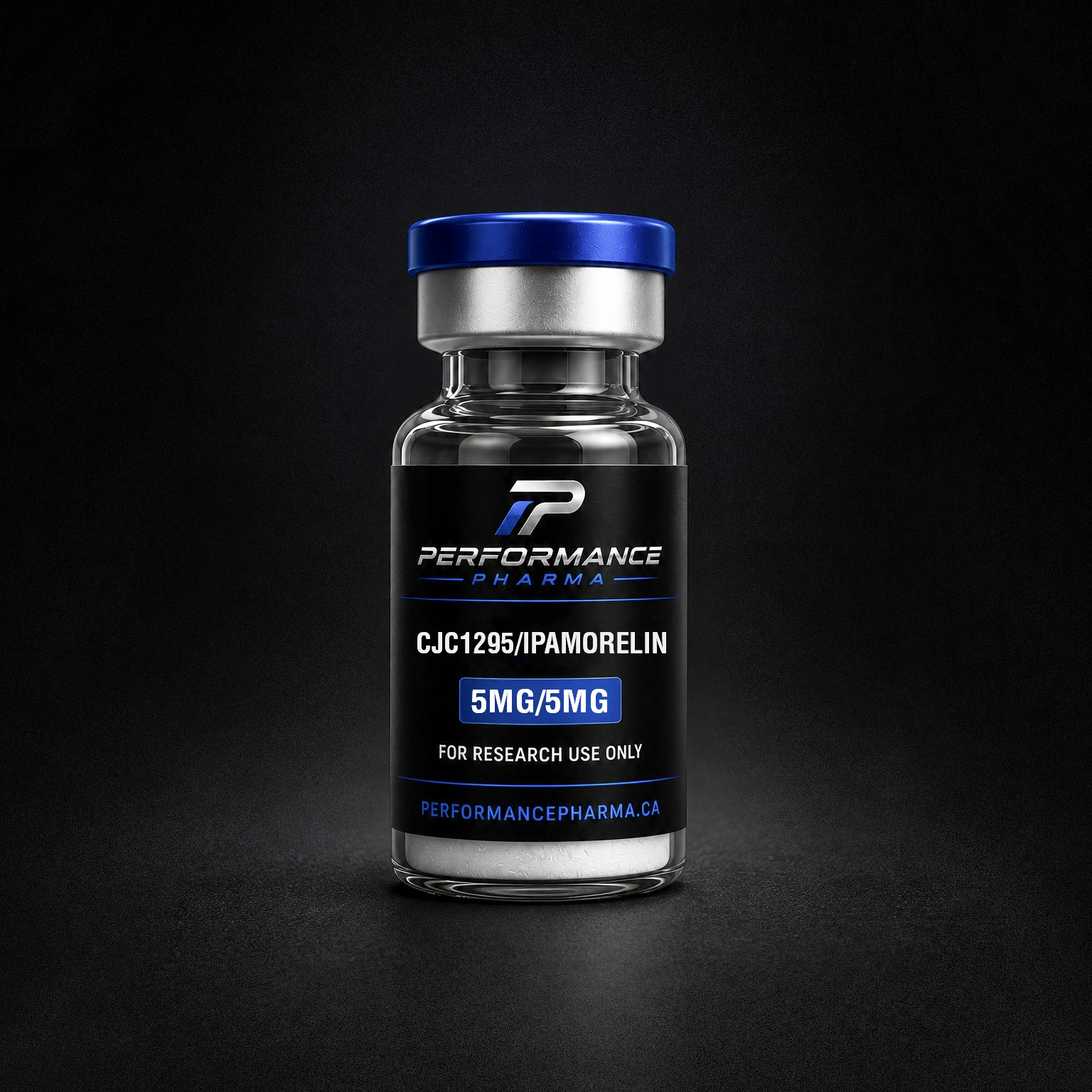
CJC-1295 / Ipamorelin – Research Peptide
$60.00
This combination pairs the long-acting growth hormone releasing hormone analog CJC-1295 with the selective growth hormone secretagogue Ipamorelin. Researchers study this synergistic blend for growth hormone pulse optimization and recovery-related applications.
Description
CJC-1295 / Ipamorelin is a combination of two investigational peptides frequently studied together for their complementary effects on the growth hormone (GH) axis. CJC-1295 is a long-acting analog of growth hormone-releasing hormone (GHRH), while Ipamorelin is a highly selective growth hormone secretagogue (GHS) that activates the growth hormone secretagogue receptor (GHSR-1a). Together, these peptides provide researchers with a valuable model for investigating physiological regulation of endogenous GH secretion.
Unlike exogenous growth hormone administration, which bypasses normal endocrine feedback mechanisms, CJC-1295 and Ipamorelin stimulate the body’s own GH production through separate but interconnected pathways. CJC-1295 enhances pituitary responsiveness through GHRH receptor activation, while Ipamorelin promotes pulsatile GH release by activating GHSR-1a. This complementary mechanism has made the combination a common subject of endocrinology, metabolism, and regenerative physiology research.
Although both peptides have been evaluated individually in laboratory and early clinical studies, research examining the combination remains comparatively limited. Additional controlled human studies are needed to better characterize its physiological effects and long-term safety.
Research Overview
Growth hormone secretion is regulated through a complex interaction between stimulatory and inhibitory hormones within the hypothalamic-pituitary axis. Endogenous GH release is primarily controlled by growth hormone-releasing hormone (GHRH), somatostatin, and the stomach-derived hormone ghrelin.
CJC-1295 was developed to prolong stimulation of the GHRH receptor, resulting in sustained enhancement of endogenous GH release. Ipamorelin, by contrast, selectively stimulates the ghrelin receptor (GHSR-1a), producing pulsatile secretion of GH while demonstrating minimal activity on cortisol, prolactin, and ACTH in many experimental studies.
Because these peptides target distinct regulatory mechanisms, researchers have investigated whether their combined administration more closely replicates normal physiological GH secretion than either compound alone.
Mechanism of Action
CJC-1295 and Ipamorelin influence different components of the endocrine pathways responsible for growth hormone regulation.
GHRH Receptor Activation
CJC-1295 binds to growth hormone-releasing hormone receptors located on somatotroph cells within the anterior pituitary gland.
This stimulates endogenous GH synthesis and release while maintaining physiological negative feedback regulation.
Its prolonged activity is achieved through structural modifications that increase circulating half-life compared with native GHRH.
Growth Hormone Secretagogue Receptor Activation
Ipamorelin selectively activates GHSR-1a, the endogenous receptor for ghrelin.
Activation of this receptor promotes pulsatile growth hormone release while generally producing minimal stimulation of:
- Cortisol
- Prolactin
- Adrenocorticotropic hormone (ACTH)
This receptor selectivity distinguishes Ipamorelin from earlier growth hormone secretagogues.
Growth Hormone–IGF-1 Axis
Together, increased endogenous GH secretion stimulates production of insulin-like growth factor-1 (IGF-1).
The GH/IGF-1 axis plays an important physiological role in:
- Protein metabolism
- Skeletal muscle biology
- Bone remodeling
- Connective tissue maintenance
- Cellular growth
- Tissue repair
These pathways remain active areas of endocrinology and regenerative medicine research.
Complementary Endocrine Signaling
Because CJC-1295 and Ipamorelin stimulate GH release through separate receptors, researchers continue investigating whether simultaneous activation results in enhanced physiological GH pulsatility while preserving normal endocrine feedback mechanisms.
Current Scientific Research
Most available evidence for this combination is derived from studies of the individual peptides, supported by smaller investigations evaluating combined endocrine responses.
Endocrinology Research
Researchers have examined the combination as a model for understanding:
- Pulsatile GH secretion
- Pituitary regulation
- GHRH signaling
- Ghrelin receptor physiology
- Endocrine feedback mechanisms
These investigations continue to improve understanding of normal growth hormone regulation.
Body Composition Research
Experimental studies have explored the physiological consequences of increased endogenous GH and IGF-1 production on lean tissue maintenance, adipose tissue metabolism, and overall body composition.
Further controlled clinical studies remain necessary to define these relationships.
Regenerative Physiology
Because growth hormone and IGF-1 influence connective tissue biology, skeletal muscle physiology, and protein turnover, the combination has become an important research tool within regenerative medicine and healthy aging investigations.
Healthy Aging Research
Natural declines in GH secretion occur throughout adulthood. CJC-1295 / Ipamorelin is therefore frequently investigated as an experimental model for studying endocrine changes associated with aging and their effects on tissue maintenance and metabolic function.
Potential Research Applications
Current scientific literature is investigating CJC-1295 / Ipamorelin in relation to:
- Growth hormone physiology
- IGF-1 regulation
- Endocrine signaling
- Skeletal muscle biology
- Connective tissue research
- Protein metabolism
- Healthy aging
- Body composition
- Regenerative physiology
These represent active areas of scientific investigation and should not be interpreted as established therapeutic indications.
Product Snapshot
Research Category: Growth Hormone Secretagogue / GHRH Analog Combination
Components:
- CJC-1295
- Ipamorelin
Primary Molecular Targets:
- Growth Hormone-Releasing Hormone Receptor (GHRH-R)
- Growth Hormone Secretagogue Receptor (GHSR-1a)
Research Administration Route: Experimental laboratory use
Development Status: Extensive preclinical and early clinical research
Evidence Strength: ★★★★☆
Strong mechanistic evidence supported by animal studies and early human investigations of the individual peptides. Direct evidence evaluating the combination remains more limited.
Key Scientific References
Teichman SL, Neale A, Lawrence B, et al. Prolonged Stimulation of Growth Hormone and IGF-1 Following Administration of CJC-1295. Journal of Clinical Endocrinology & Metabolism.
A landmark clinical study demonstrating the prolonged endocrine effects of CJC-1295 on endogenous GH and IGF-1 secretion.
Raun K, Hansen BS, Johansen PB, et al. Ipamorelin, the First Selective Growth Hormone Secretagogue. European Journal of Endocrinology.
A foundational publication describing the development and receptor selectivity of Ipamorelin and its stimulation of endogenous growth hormone release.
Smith RG, Van der Ploeg LHT, Howard AD, et al. Peptidomimetic Regulation of Growth Hormone Secretion Through the Ghrelin Receptor. Endocrine Reviews.
An authoritative review of ghrelin receptor biology, growth hormone secretagogues, and the physiological regulation of GH secretion.
Jørgensen JOL, et al. Growth Hormone Secretagogues in Human Physiology and Clinical Investigation. Clinical Endocrinology.
A comprehensive review examining GHRH analogs, growth hormone secretagogues, endocrine regulation, and their applications in clinical and translational research.
PubMed – CJC-1295 and Ipamorelin Research
A continually updated collection of peer-reviewed publications examining CJC-1295, Ipamorelin, and growth hormone physiology across endocrinology, metabolism, healthy aging, and regenerative medicine.
Research Use Statement
For Research Use Only.
CJC-1295 / Ipamorelin supplied by Performance Pharma is intended exclusively for laboratory and scientific research conducted by qualified professionals. This product is not approved for human or veterinary use and is not intended to diagnose, treat, cure, or prevent any disease. It should be handled, stored, and used in accordance with applicable laws, regulations, and accepted laboratory research practices.
Additional information
| Size | 10MG, 5MG |
|---|
Reviews (0)
Shipping and Delivery


Related products
Ipamorelin – Research Peptide
Price range: $35.00 through $55.00
Sold out
Select options
This product has multiple variants. The options may be chosen on the product page
Reviews
There are no reviews yet.