SAVE 15% OFF ON YOUR FIRST ORDER - USE CODE PERFORM15 AT CHECKOUT

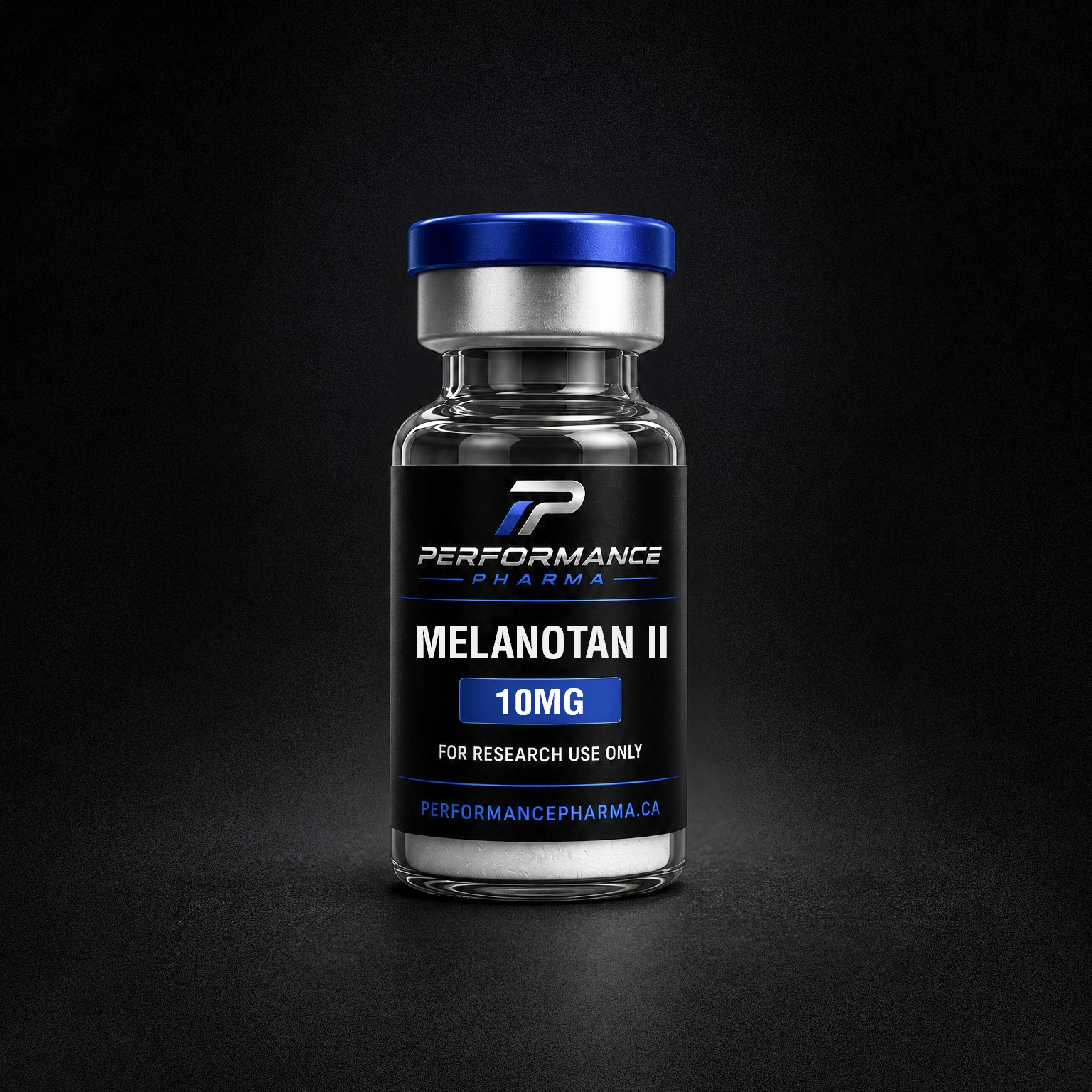

Melanotan II – Research Peptide
$45.00
Melanotan II is a synthetic analog of alpha-melanocyte-stimulating hormone (α-MSH). It is commonly researched for its effects on melanogenesis, pigmentation, and melanocortin receptor activity.
Description
Melanotan II (MT-II) is a synthetic cyclic heptapeptide developed as an analog of the endogenous hormone alpha-melanocyte-stimulating hormone (α-MSH). Designed to improve receptor affinity and metabolic stability compared with the native peptide, Melanotan II has become an important investigational compound for studying the melanocortin receptor system, including its roles in pigmentation, energy homeostasis, inflammation, appetite regulation, and neuroendocrine signaling.
The melanocortin receptor family consists of five G protein-coupled receptors (MC1R–MC5R), each regulating distinct physiological processes. Unlike more selective melanocortin agonists such as PT-141 (Bremelanotide), Melanotan II exhibits activity across multiple receptor subtypes, making it a valuable research tool for understanding the broader biological functions of the melanocortin system.
Since its development in the 1990s, Melanotan II has been investigated extensively in laboratory studies, animal models, and early human clinical research. Although its pharmacology is well characterized, many aspects of melanocortin receptor biology continue to be actively explored.
Research Overview
The endogenous melanocortin system originates from proopiomelanocortin (POMC), a precursor protein that gives rise to several biologically active peptides, including α-MSH, adrenocorticotropic hormone (ACTH), and β-MSH. These peptides regulate numerous physiological functions through activation of melanocortin receptors distributed throughout the central nervous system and peripheral tissues.
Melanotan II was developed to provide a more potent and longer-acting melanocortin receptor agonist than native α-MSH. Structural modifications increase resistance to enzymatic degradation while maintaining strong receptor affinity.
Because of its broad receptor activity, Melanotan II has become an important experimental compound in neuroscience, endocrinology, dermatology, and metabolic physiology.
Mechanism of Action
Melanotan II acts primarily through activation of multiple melanocortin receptor subtypes.
Melanocortin Receptor Activation
Experimental studies demonstrate activity at several melanocortin receptors, including:
- Melanocortin-1 Receptor (MC1R)
- Melanocortin-3 Receptor (MC3R)
- Melanocortin-4 Receptor (MC4R)
- Melanocortin-5 Receptor (MC5R)
The degree of receptor activation varies among receptor subtypes and contributes to the peptide’s diverse physiological effects.
Pigmentation Biology
MC1R is expressed primarily on melanocytes, where activation stimulates melanogenesis through increased production of eumelanin.
Melanotan II has therefore become an important research tool for investigating:
- Melanocyte biology
- Melanin synthesis
- Photoprotection
- Pigmentation pathways
Central Nervous System Activity
Activation of MC3R and MC4R within the hypothalamus influences multiple neuroendocrine pathways involved in:
- Appetite regulation
- Energy expenditure
- Autonomic function
- Motivational behavior
Researchers continue investigating the complex interactions between melanocortin signaling and central nervous system physiology.
Anti-Inflammatory Signaling
The endogenous melanocortin system has also been implicated in regulating inflammatory responses.
Experimental investigations suggest melanocortin receptor activation may influence cytokine production, immune signaling, and tissue homeostasis, although these mechanisms remain under active study.
Current Scientific Research
Melanotan II has been evaluated across a broad range of laboratory investigations and early clinical studies.
Pigmentation Research
One of the earliest applications of Melanotan II involved studying the regulation of melanogenesis and skin pigmentation.
Researchers continue to investigate:
- Melanocyte function
- UV-induced pigmentation
- Melanin biosynthesis
- Photobiology
These studies have contributed substantially to understanding MC1R physiology.
Metabolic Research
Because MC3R and MC4R play central roles in appetite regulation and energy homeostasis, Melanotan II has been investigated in experimental models of:
- Feeding behavior
- Body weight regulation
- Energy balance
- Obesity physiology
Neuroendocrine Research
Melanotan II remains an important experimental model for studying central melanocortin pathways, hypothalamic regulation, and neuroendocrine communication.
Translational Melanocortin Biology
Current investigations continue to examine receptor pharmacology, intracellular signaling pathways, and the physiological functions of individual melanocortin receptor subtypes.
Potential Research Applications
Current scientific literature is investigating Melanotan II in relation to:
- Melanocortin receptor biology
- Pigmentation physiology
- Melanogenesis
- Appetite regulation
- Energy homeostasis
- Neuroendocrine signaling
- Photobiology
- Inflammatory regulation
- Hypothalamic physiology
These represent active areas of scientific investigation and should not be interpreted as established therapeutic indications.
Product Snapshot
Research Category: Melanocortin Receptor Agonist
Alternative Name: MT-II
Primary Molecular Targets:
- Melanocortin-1 Receptor (MC1R)
- Melanocortin-3 Receptor (MC3R)
- Melanocortin-4 Receptor (MC4R)
- Melanocortin-5 Receptor (MC5R)
Research Administration Route: Experimental laboratory use
Development Status: Extensive preclinical research with early human clinical investigation
Evidence Strength: ★★★★☆
Strong mechanistic and translational evidence supports Melanotan II as a foundational research tool for investigating melanocortin receptor physiology, although larger modern clinical studies remain limited.
Key Scientific References
Hruby VJ, Lu D, Sharma SD, et al. Design and Biological Activity of Melanocortin Receptor Agonists. Proceedings of the National Academy of Sciences (PNAS).
A landmark publication describing the rational design of Melanotan II and its receptor pharmacology, establishing the foundation for subsequent melanocortin research.
Hadley ME, Dorr RT. Melanocortin Peptides and Their Receptors: Pharmacology and Physiology. Endocrine Reviews.
A comprehensive review detailing the biology of endogenous melanocortin peptides, receptor subtypes, and the physiological basis for synthetic agonists such as Melanotan II.
Cone RD. The Melanocortin Receptors in Energy Homeostasis and Disease. Nature Reviews Endocrinology.
An authoritative review examining the physiological functions of melanocortin receptors in appetite regulation, metabolism, pigmentation, and neuroendocrine control.
Abdel-Malek ZA, Scott MC, Suzuki I, et al. The Melanocortin-1 Receptor and Regulation of Human Melanocyte Biology. Pigment Cell Research.
An important review describing MC1R signaling, melanin synthesis, and the molecular mechanisms underlying pigmentation research.
PubMed – Melanotan II Research
A continually updated collection of peer-reviewed publications examining Melanotan II across melanocortin receptor biology, pigmentation, metabolism, neuroendocrinology, and translational pharmacology.
Research Use Statement
For Research Use Only.
Melanotan II supplied by Performance Pharma is intended exclusively for laboratory and scientific research conducted by qualified professionals. This product is not approved for human or veterinary use and is not intended to diagnose, treat, cure, or prevent any disease. It should be handled, stored, and used in accordance with applicable laws, regulations, and accepted laboratory research practices.
Additional information
| Size | 10MG |
|---|
Reviews (0)
Shipping and Delivery


Related products

Select options
This product has multiple variants. The options may be chosen on the product page
Bacteriostatic Water – Research Peptide Canada
Price range: $10.00 through $15.00
Select options
This product has multiple variants. The options may be chosen on the product page
Reviews
There are no reviews yet.